
A people-first prospecting method for freelancers and agencies offering SEO, content, guest posting, backlink outreach, and lead-generation services.
SaaS companies can be excellent prospects for freelancers and small agencies because their products live online. They often depend on search visibility, useful content, product education, reviews, partnerships, and a steady flow of qualified leads. That does not mean every SaaS company needs your service today. The smarter approach is to find companies that fit your niche, look for a visible marketing gap, and contact them with a specific reason for reaching out.
This guide shows a free research process using Google Search, public company pages, and SaaSworthy. It also explains how to qualify leads before outreach so you spend less time sending generic messages and more time speaking to relevant businesses.
| Trust note: A company appearing in Google or a SaaS directory is a prospect, not proof that it is actively buying SEO, backlinks, guest posts, or outreach services. Always verify the company, the marketing gap, and the correct contact before pitching. |
Why SaaS Is a Strong Client Niche
SaaS businesses sell software through the web, so digital acquisition is usually important to them. Depending on the product and growth stage, a company may invest in SEO, content, product-led education, partnerships, digital PR, paid acquisition, or outbound sales.
- SEO and content: product pages, comparison pages, use-case pages, templates, guides, and documentation can attract search demand.
- Authority and mentions: relevant editorial links, expert contributions, digital PR, and partnerships can support brand discovery and credibility.
- Lead generation: many B2B SaaS companies use demo requests, free trials, consultations, or sales calls as conversion paths.
- Ongoing competition: SaaS categories can be crowded, so companies often keep improving content, positioning, and acquisition channels.
The opportunity for a freelancer is not “SaaS companies need everything.” It is “some SaaS companies have a problem I can clearly identify and help solve.” That distinction makes outreach more credible.
Start With an Ideal Client Profile Before You Search
Random prospecting produces random results. Before opening Google, define a simple ideal client profile (ICP). You only need a few decisions:
- Industry: for example CRM, real estate software, legal software, healthcare software, HR software, accounting, AI tools, or marketing software.
- Company stage: early-stage startup, growing small business, established mid-market company, or enterprise vendor.
- Service fit: SEO, content writing, digital PR/guest posting, link outreach, technical SEO, or lead generation.
- Geography: choose markets you can legally and practically serve.
- Visible trigger: weak blog coverage, poor category rankings, thin comparison pages, outdated content, missing use-case pages, weak backlink profile, or a clear expansion campaign.
Example ICP: B2B property-management SaaS companies in the US or UK with an active website and blog, but weak organic coverage around “property management software for landlords,” “tenant screening,” or related commercial topics.
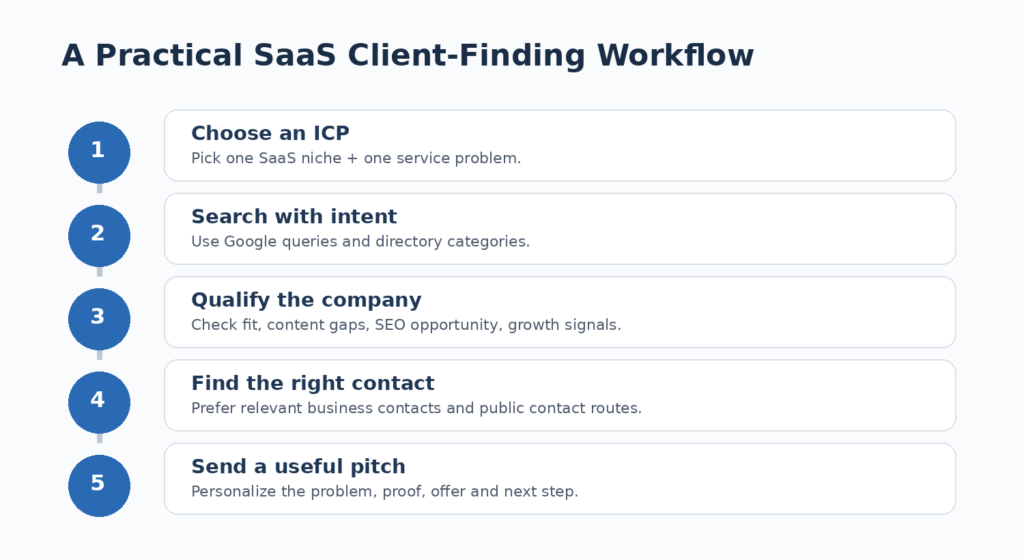
Figure 1. A repeatable five-step workflow for SaaS prospecting.
Use Google Search With Buyer-Intent and Business Signals
Google can help you discover SaaS companies, product pages, pricing pages, demo pages, comparison pages, blogs, and contact routes. Search operators are useful for narrowing results, but they are not a perfect database. Google notes that operators such as site: are affected by indexing and retrieval limits, so use them as discovery tools rather than a complete inventory.
Useful operator reference: Google Search Central — search operators
A simple search formula
NICHE + PRODUCT TERM + COMMERCIAL SIGNAL + OPTIONAL OPERATOR
Examples of commercial signals include “pricing,” “book a demo,” “request a demo,” “free trial,” “contact sales,” “plans,” “features,” or “customers.” These terms help you find active product websites rather than generic articles about software.
30 practical Google queries for SaaS prospecting
| SaaS niche | Search query |
|---|---|
| CRM | “CRM software for small business” “pricing” |
| CRM | “real estate CRM” “book a demo” |
| CRM | “sales CRM” “contact sales” |
| Marketing | “marketing automation software” “request a demo” |
| Marketing | “email marketing software” “pricing” |
| Marketing | “social media management software” “free trial” |
| Finance | “billing and invoicing software” “pricing” |
| Finance | “subscription billing software” “demo” |
| Finance | “expense management software” “contact sales” |
| HR | “employee scheduling software” “book a demo” |
| HR | “HR software for small business” “pricing” |
| HR | “applicant tracking system” “free trial” |
| Legal | “legal practice management software” “pricing” |
| Legal | “case management software for law firms” “demo” |
| Legal | “SaaS for lawyers” “contact” |
| Healthcare | “clinic management software” “book a demo” |
| Healthcare | “patient scheduling software” “pricing” |
| Healthcare | “medical practice management software” “free trial” |
| Real estate | “property management software” “request a demo” |
| Real estate | “tenant management software” “pricing” |
| Real estate | “real estate management software” “contact sales” |
| Construction | “construction management software” “pricing” |
| Construction | “contractor management software” “demo” |
| Construction | “field service management software” “free trial” |
| AI | “AI customer support software” “pricing” |
| AI | “AI writing assistant” “plans” |
| AI | “AI sales assistant” “book a demo” |
| Productivity | “project management software” “pricing” |
| Productivity | “team collaboration software” “free trial” |
| Productivity | “workflow automation software” “contact sales” |
Useful variations
- Add a country or city only when geography matters: “HR software” “book a demo” “USA”.
- Use site:.co, site:.io, or site:.com as optional filters, but do not assume a domain extension tells you the company’s real location.
- Search for product content: “best [category] software” + a company name, or company + “alternatives” to understand its competitive SERP.
- Search for contact paths: company name + “contact”, “press”, “partnerships”, “marketing”, or “about”.
- Use inurl:pricing or inurl:contact selectively when it improves the result set. Test several versions instead of relying on one query.
Use SaaSworthy as a Research Directory, Not a Buyer List
SaaSworthy is a software discovery and comparison site with broad category coverage. Its current category directory includes areas such as CRM, HR, marketing automation, lead generation, billing and invoicing, AI tools, project management, and many more. That makes it useful for discovering companies inside a specific SaaS niche.
Browse the current category list: SaaSworthy — All Software Categories
A clean prospecting workflow is:
- Choose one category that matches your service and target market.
- Open product profiles and visit the company’s official website.
- Confirm the company is active and relevant. Check its product pages, pricing/demo path, blog, resources, recent updates, and target audience.
- Look for a real marketing opportunity before adding the company to your outreach list.
- Record the company URL, niche, reason for fit, visible gap, public contact route, and your suggested angle.
| Important: Do not copy a directory listing and assume it is a qualified lead. Directories are for discovery. Qualification should happen on the company’s own website and other reliable public sources. |
Qualify Every SaaS Lead Before Outreach
A short qualification step can save more time than sending hundreds of extra emails. Score each prospect out of 10 using visible, verifiable signals.
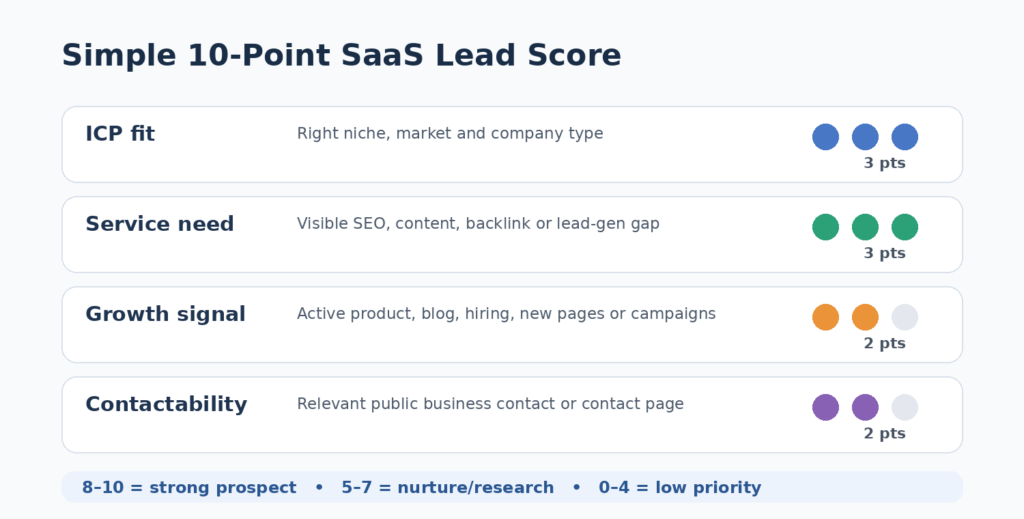
Figure 2. A simple score to prioritize stronger prospects.
What counts as a useful marketing gap?
- Content gap: important use cases or customer questions are missing from the site.
- Search gap: competitors rank for commercial or educational topics the prospect barely covers.
- Conversion gap: strong product but weak landing-page copy, unclear calls to action, or limited comparison content.
- Authority gap: strong content but little evidence of relevant coverage, partnerships, or editorial mentions.
- Freshness gap: high-value articles are outdated, thin, or no longer match the current product.
- Local/vertical gap: the tool serves several industries but has weak pages for one valuable vertical such as healthcare, legal, or real estate.
Avoid inventing a problem. If you cannot point to a clear gap, move the lead down your priority list.
Find the Right Contact Without Turning Research Into Spam
For B2B outreach, relevance matters more than volume. Start with public business contact routes: contact forms, partnership pages, sales pages, press pages, or role-based business emails published by the company. If you identify a person through a public professional profile, make sure your message is genuinely relevant to their role.
- SEO service → SEO lead, head of growth, content lead, marketing manager, or founder at a smaller company.
- Content writing → content manager, editor, head of marketing, or product marketing lead.
- Digital PR / guest-post outreach → PR, communications, content, partnerships, or growth team.
- Lead generation → sales leader, growth lead, revenue operations, or founder, depending on company size.
A simple outreach structure
1. Context: one sentence proving you looked at the company.
2. Problem: one specific, observable gap.
3. Value: what you can improve and why it matters.
4. Proof: a relevant result, example, process, or mini audit — only if it is real.
5. Next step: one low-friction question, such as whether they want the short audit or a few ideas.
| Example outreach angle “I noticed your product has strong pages for project management and time tracking, but your site has limited comparison content for teams moving from spreadsheets. I mapped a few search topics and competitor pages that could support trial signups. Would it be useful if I sent the short list?” |
Keep Outreach Compliant and Respectful
Cold outreach rules vary by country, recipient type, and communication method. If you contact businesses in the United States, the FTC’s CAN-SPAM guidance applies to commercial email, including B2B messages. In the UK, PECR and data-protection rules can apply differently depending on whether the recipient is a corporate subscriber, sole trader, or individual subscriber. Always check the rules that apply to your target market.
Official references: FTC CAN-SPAM compliance guide • ICO business-to-business marketing guidance
- Use accurate sender information and honest subject lines.
- Make the message relevant to the recipient’s business role.
- Provide a clear way to opt out where required, and honor opt-out requests.
- Do not pretend you have a relationship, referral, result, or audit that does not exist.
- Avoid blasting the same generic pitch to every address you can collect.
A Free Weekly SaaS Prospecting Routine
| Day | Action |
|---|---|
| Monday | Choose one SaaS category and 5–10 search queries. Build a raw list of 30–50 companies. |
| Tuesday | Visit each company site. Remove poor-fit or inactive prospects. Add a short “reason to contact” note. |
| Wednesday | Review search/content gaps and score the remaining leads out of 10. |
| Thursday | Find the correct public contact route and write personalized outreach for the strongest leads. |
| Friday | Send a controlled batch, update your CRM/sheet, record replies, and refine the next week’s ICP based on what worked. |
Common Mistakes That Reduce Reply Rates
- Targeting every SaaS company instead of one clear niche.
- Treating “found on Google” as “needs my service.”
- Pitching backlinks or guest posts without explaining the business reason behind them.
- Using made-up metrics, fake personalization, or claims such as “I found errors” without checking the site.
- Sending a long service menu instead of one relevant offer.
- Ignoring local email-marketing and privacy rules.
- Failing to track why a lead was selected, which makes follow-up generic.
Frequently Asked Questions
What is the best free way to find SaaS clients?
Start with a narrow SaaS niche, use Google searches with commercial signals such as “pricing” or “book a demo,” then verify each company on its own website. A directory such as SaaSworthy can expand discovery, but qualification should happen separately.
Can I find SaaS clients without paid SEO tools?
Yes. You can build a useful prospect list with Google, company websites, public professional profiles, directories, and a spreadsheet. Paid tools can speed up metrics and contact research, but they are not required to begin.
Are Google search operators enough to build a complete list?
No. Google notes that search operators are affected by indexing and retrieval limits. Use several query variations and additional discovery sources rather than expecting one operator to return every relevant company.
Is every company on SaaSworthy a good outreach prospect?
No. A directory listing only confirms that the product is discoverable there. You still need to check company fit, current activity, marketing gaps, geography, contact relevance, and legal considerations.
What should I offer a SaaS company first?
Offer one specific improvement tied to a visible problem. A short content-gap list, landing-page observation, competitor topic map, or mini SEO review is usually easier to evaluate than a generic “we do SEO and backlinks” pitch.
Final Thoughts
Finding SaaS clients is less about collecting the largest possible list and more about building a smaller list you can explain. Google can help you discover companies. SaaS directories can help you explore categories. The company’s own website helps you verify fit. A simple lead score helps you prioritize. Personalized, compliant outreach gives the prospect a clear reason to reply.
If you repeat that process consistently — niche by niche — you can build a sustainable SaaS prospecting pipeline without depending on an expensive lead database.
Author & Editorial Note
Author: Zulqarnain Zilli
Method: This article was rewritten as a practical educational guide using current public documentation from Google Search Central, SaaSworthy, the U.S. Federal Trade Commission, and the UK Information Commissioner’s Office. Product-directory details and legal guidance should be re-checked when the article is updated.
Sources & Further Reading
- Google Search Central — Creating helpful, reliable, people-first content
- Google Search Central — Search operators
- Google Search Central — Search Essentials
- SaaSworthy — All Software Categories
- SaaSworthy — Software discovery homepage
- FTC — CAN-SPAM Act: A Compliance Guide for Business
- ICO — Business-to-business marketing