
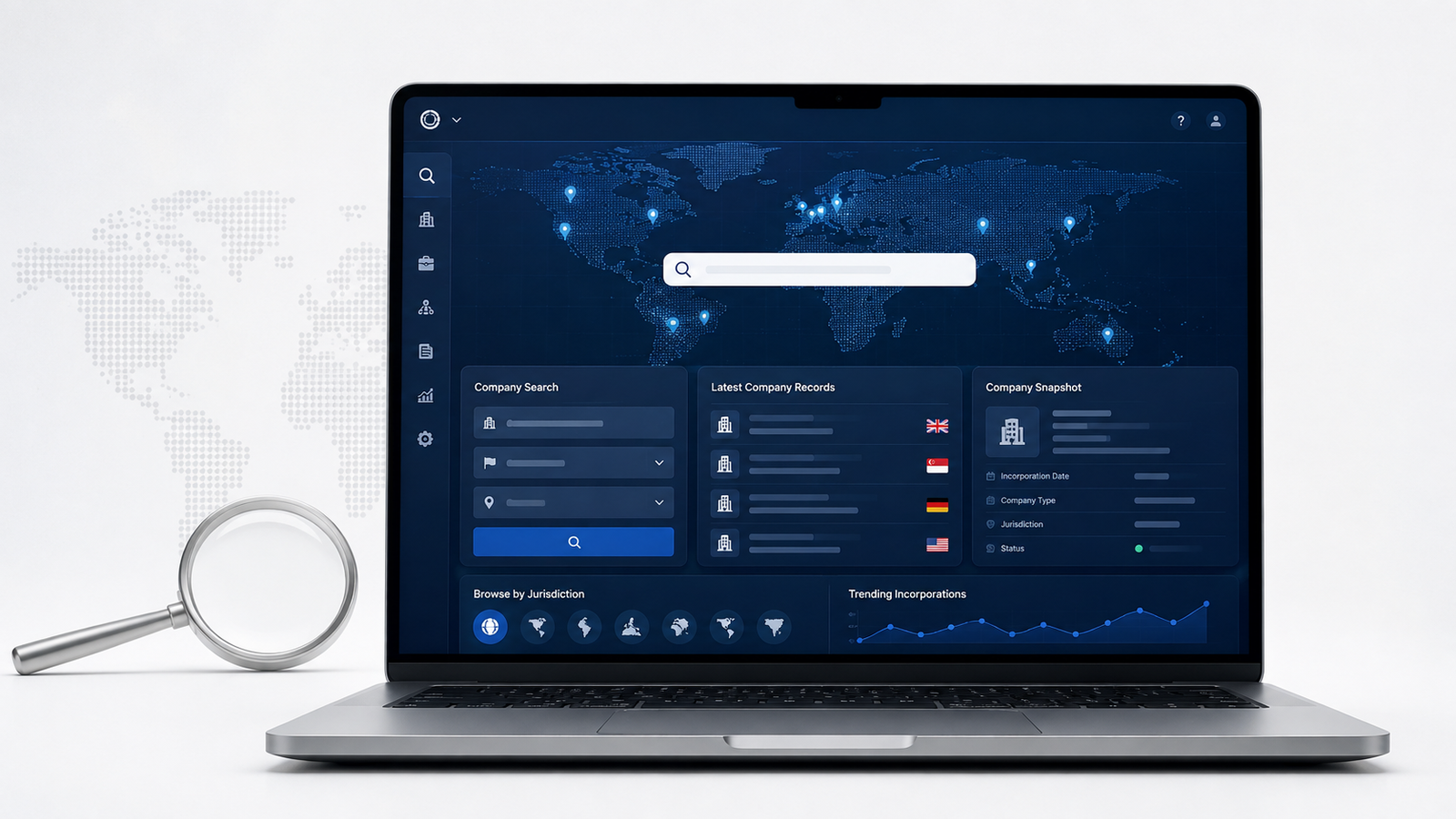
Finding genuine businesses online is not always easy. Many traditional business directories contain outdated websites, duplicate listings or companies that are no longer operating.
But what if you could search businesses through information collected from official company registers?
That is the main purpose of OpenCorporates. It is a global legal-entity database containing information about more than 235 million companies across over 145 jurisdictions. Its data comes from government company registers and other official public sources.
However, there is a hidden truth that most marketers do not understand:
OpenCorporates is not a ready-made email or client database. It is a company-verification and research platform that can help you discover potential clients when used with Google, LinkedIn and company websites.
What Is OpenCorporates?
OpenCorporates collects company registration information from official business registers and presents it in one searchable system.
Instead of visiting individual government websites for the United States, United Kingdom, Canada, Europe and other regions, users can search many jurisdictions from one platform.
The available information can include:
- Registered company name
- Company registration number
- Incorporation date
- Company status
- Legal business type
- Registered address
- Company jurisdiction
- Previous company names
- Directors or company officers
- Filing information
- Official registry source
- Industry classification, where available
The exact information depends on what the original government register makes publicly available.
The Hidden Truth About OpenCorporates
It Is Not a Contact Database
The biggest misunderstanding is that OpenCorporates provides emails and phone numbers for every company.
It normally focuses on legal registration information. Most records will not contain:
- Marketing email addresses
- Personal phone numbers
- Social media profiles
- Website traffic
- Company revenue
- Amazon store links
- SEO performance
- Advertising information
You must use the company name, address, director name or registration number to conduct further research.
A Registered Company Is Not Always an Active Business
A company can be legally registered but may not have employees, customers or an active website.
Some businesses may be:
- Dormant
- Dissolved
- Inactive
- Recently registered
- Holding companies
- Registered only for legal purposes
- Operating under another brand name
Always check the company status and incorporation date before treating it as a potential client.
Data Quality Varies by Country
OpenCorporates standardizes records from many different official sources, but every country provides a different level of information.
One jurisdiction may provide company directors, addresses and filing dates, while another may offer only a company name and registration number.
OpenCorporates provides coverage and freshness information so users can check how recently records from a jurisdiction have been updated.
The Legal Company Name May Be Different from the Brand
A business may operate under a popular brand name while being registered under a completely different legal company name.
For example, a website may display a short marketing brand, but its Privacy Policy or Terms and Conditions may show the full registered company.
This is why OpenCorporates is especially useful for verifying who actually owns or operates a business.
Can You Find Clients Through OpenCorporates?
Yes, but OpenCorporates should be treated as the first stage of client research, not the final contact source.
You can use it to discover and verify:
- Recently incorporated companies
- Active local businesses
- E-commerce companies
- Marketing agencies
- Software companies
- Real-estate businesses
- Construction companies
- Recruitment agencies
- Financial and professional firms
- Import and export companies
- Healthcare businesses
- Consulting companies
After finding a company, you must locate its website, decision-maker and public business contact details.
How to Find Clients on OpenCorporates
Step 1: Select a Country and Industry
Do not search all companies without a clear target.
Start with a country and service category, such as:
- SEO agencies in the United States
- Real-estate companies in the United Kingdom
- E-commerce businesses in Canada
- Software companies in Australia
- Recruitment agencies in Germany
- Construction companies in France
Targeting one industry makes it easier to create a relevant offer.
Step 2: Use Advanced Search
The OpenCorporates advanced search allows users to search companies or officers and apply filters such as jurisdiction, company status, incorporation date, company type and industry classification.
Useful filters include:
- Jurisdiction: Select the country, state or business register.
- Company status: Prioritize active companies.
- Incorporation date: Find recently registered businesses.
- Industry code: Target a particular business category.
- Registered address: Research businesses in a particular city.
- Officer name: Find other companies connected to a director.
Step 3: Focus on Recently Registered Companies
Recently incorporated businesses can be useful leads because they may still need:
- A business website
- Website content
- Search engine optimization
- Logo and branding
- Social media setup
- Google Business Profile
- Press releases
- Guest posts and backlinks
- Lead-generation systems
- Email marketing
However, do not contact every new company with the same message. First verify that it has started operating.
Step 4: Check the Company Record
Review the following information:
- Is the company active?
- When was it registered?
- What is its legal name?
- Which country or state is it registered in?
- Is an officer or director listed?
- Does it have a registered address?
- Is an industry classification available?
- Does the record link to the official government source?
OpenCorporates includes source information so users can check where a company record originated.
Step 5: Find Its Website and Brand
Copy the legal company name and search it on Google.
Use searches such as:
- “Company Name” official website
- “Company Name” contact
- “Company Name” LinkedIn
- “Director Name” company
- “Company Name” services
- “Company Name” email
- “Company Name” city
Check the website’s footer, About page, Contact page, Privacy Policy and Terms page to confirm that it belongs to the same legal company.
Step 6: Check Whether the Business Needs Your Service
Before sending an offer, review the business properly.
For SEO and marketing services, check:
- Does the company have a website?
- Is its website professional?
- Does it rank for relevant keywords?
- Is its blog active?
- Are service pages properly written?
- Does it have quality backlinks?
- Is the website mobile-friendly?
- Are social profiles active?
- Is contact information easy to find?
- Does it have reviews and case studies?
This turns basic company data into a qualified lead.
Best Clients to Target
Newly Incorporated Businesses
These companies may need websites, branding, content and complete marketing setups.
Active Companies with Weak Websites
A legally active company with an outdated website can be a good prospect for web design, SEO and content writing.
E-commerce Businesses
E-commerce companies may need product content, backlinks, Amazon SEO, advertising and conversion optimization.
Marketing Agencies
Marketing agencies can purchase white-label guest posting, content writing, SEO audits and link-building services.
Local Service Businesses
Law firms, contractors, clinics, real-estate agencies and home-service providers can benefit from local SEO and Google Business Profile optimization.
Software and Technology Companies
Technology businesses may need technical content, SaaS SEO, comparison pages, digital PR and authority backlinks.
What Services Can You Offer?
Depending on the company’s online presence, you can offer:
- Website design
- Search engine optimization
- Local SEO
- Content writing
- Guest posting
- Link building
- Digital PR
- Social media marketing
- Email outreach
- Amazon SEO
- Lead generation
- Branding and graphic design
- Google Business Profile optimization
- Website maintenance
Your offer should be based on a real weakness that you identified.
Simple Outreach Message
Subject: A Quick Suggestion for Your Company’s Online Growth
Hello,
I recently came across your company while researching businesses in your industry. I also reviewed your current online presence and noticed a few opportunities to improve your visibility and attract more potential customers.
We help businesses with website content, SEO, guest posting and authority backlinks.
I would be happy to share a short review explaining the improvements that could be useful for your company.
Best regards,
Your Name
Important Limitations
OpenCorporates is powerful, but it should not be used blindly.
Remember:
- It does not guarantee email addresses.
- A registered address may belong to an accountant or registered agent.
- A director may be connected to several companies.
- Some records may not be recently updated.
- Not every active company needs your service.
- Companies with similar names can be confused.
- One company may have multiple registrations.
- A legal entity may operate under another brand.
OpenCorporates itself notes that the same entity can sometimes appear through different registrations or identifiers, depending on the official registry structure.
Always verify important information through the official registry, business website and other reliable sources.
Is OpenCorporates Free?
Basic company searching is available through its website. OpenCorporates also provides API and bulk-data services for businesses that need company information at scale.
API access uses subscription plans with different monthly query limits.
The API can be useful for:
- Building company-verification tools
- Checking company status automatically
- Searching companies by registration date
- Finding businesses registered at an address
- Researching company officers
- Creating compliance systems
- Building lead-research dashboards
Frequently Asked Questions
Does OpenCorporates provide business owners’ emails?
Usually, no. It mainly provides legal company and officer information from official registers. Emails must normally be found through the business website or other public sources.
Can I find newly registered companies?
Yes. You can use incorporation-date and jurisdiction filters to identify recently registered companies.
Can I search for company directors?
Yes. OpenCorporates supports officer searches, although the amount of officer information varies by jurisdiction.
Is every company on OpenCorporates genuine?
The records originate from official public sources, but you must still check the company’s current status and source record before making a business decision.
Can SEO agencies use OpenCorporates?
Yes. SEO agencies can use it to identify and verify companies, then check which businesses have weak websites, limited content or poor search visibility.
Final Verdict
OpenCorporates is not a secret email list or a direct client marketplace.
Its real power is giving marketers access to structured company-registration information from official sources. You can discover newly formed companies, verify existing businesses, research directors and identify potential B2B prospects.
The hidden truth is that OpenCorporates alone will not give you ready-to-contact clients. But when you combine it with Google, LinkedIn, company websites and proper qualification, it can become a valuable source for finding genuine businesses that may need SEO, content writing, guest posting, website design and other digital services.
The winning process is simple:
Find the company, verify its status, locate its real website, identify its weakness and send a personalized offer.